← All Species
Sousa teuszii
Atlantic Humpbacked Dolphin
Critically Endangered
Also known as: Cameroon Dolphin
Sousa teuszii
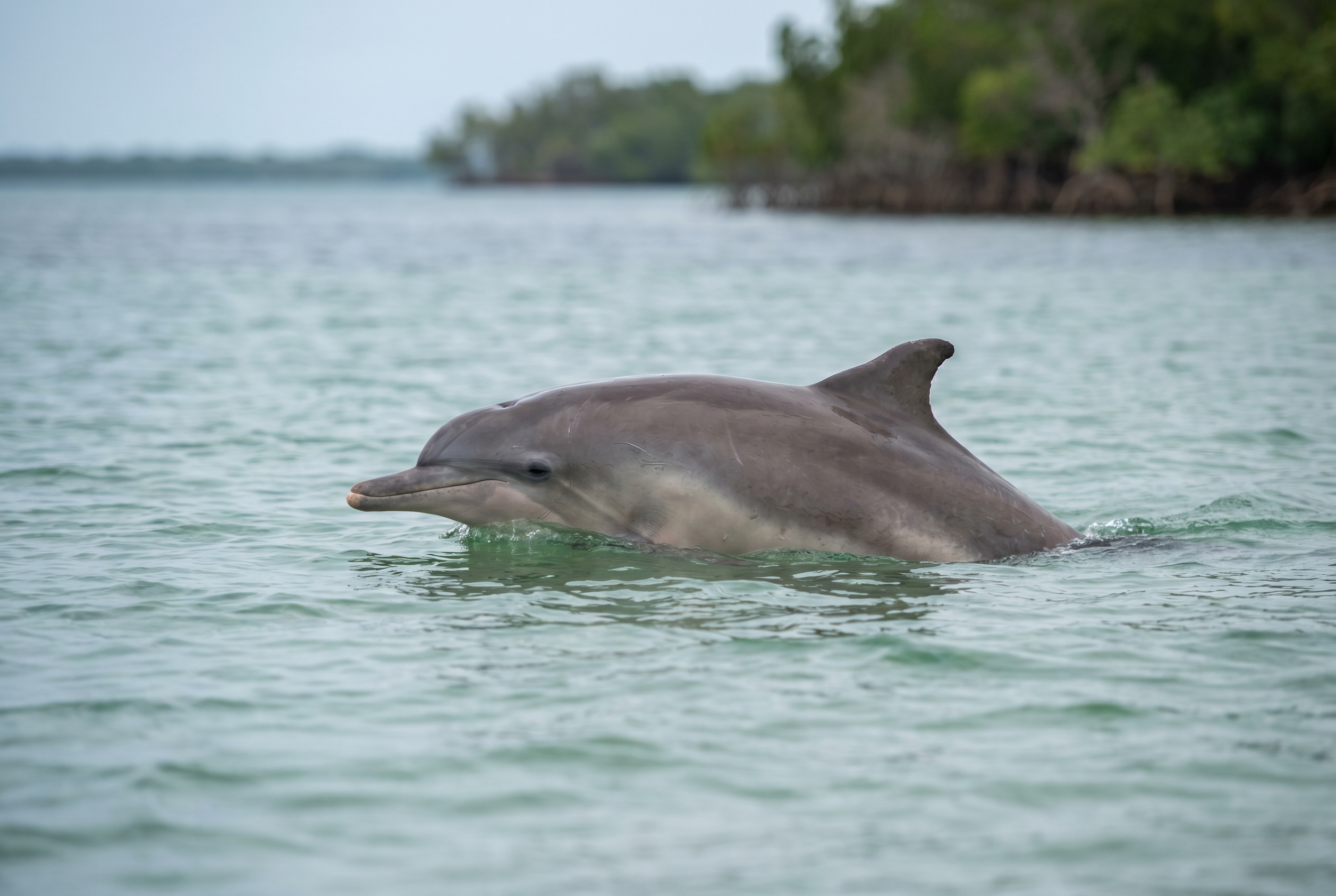
The Atlantic Humpbacked Dolphin is named for the distinctive hump found in front of its small dorsal fin — a characteristic it shares with other Sousa species. Coloring ranges from pale grey to brownish-grey. Population estimates suggest fewer than 3,000 individuals remain, making it one of the rarest marine mammals on the continent.
Well-developed echolocation suited to shallow, often turbid estuarine and coastal waters. Vision is adequate for inshore conditions.
Produces whistles and click trains for social communication and echolocation. Relatively quiet compared to open-ocean species — well-adapted to acoustically complex inshore environments.
Feeds cooperatively in shallow coastal waters, often driving fish schools onto mudflats or into mangrove roots. Has been observed associating with artisanal fishermen, driving fish into nets — a relationship documented in several West African communities.
Gestation
Approximately 10–12 months. Females give birth every 2–3 years.
Birth
Calves are born at approximately 35–40 inches long. Birth occurs year-round with possible peaks in warmer months.
Calves
Calves nurse for approximately 18 months and remain closely associated with their mothers for 2+ years. Groups with calves avoid areas with boat traffic.
Females estimated to reach sexual maturity at approximately 9–10 years; males at 10–12 years.
Found in small groups of 2–7 individuals, occasionally aggregating in groups of up to 30 at productive feeding sites. Strong social bonds between individuals — some groups appear to be stable over years.
Relatively slow, deliberate swimmers adapted to shallow coastal habitat. Occasional leaping and breaching observed, particularly by younger animals.
In Mauritania, Atlantic Humpbacked Dolphins have been documented working cooperatively with local fishermen for generations — circling fish schools and driving them into fishermen's nets in exchange for access to stunned or escaped fish. This mutualistic behavior may be culturally transmitted.
Estimated at 40+ years based on related species. Threats include gillnet bycatch, habitat destruction (mangrove clearance), artisanal hunting, boat strikes, and prey depletion from overfishing.
Dolphin Store