← All Species
Lagenorhynchus acutus
Atlantic White-sided Dolphin
Least Concern
Also known as: Jumper +2 more
Lagenorhynchus acutus
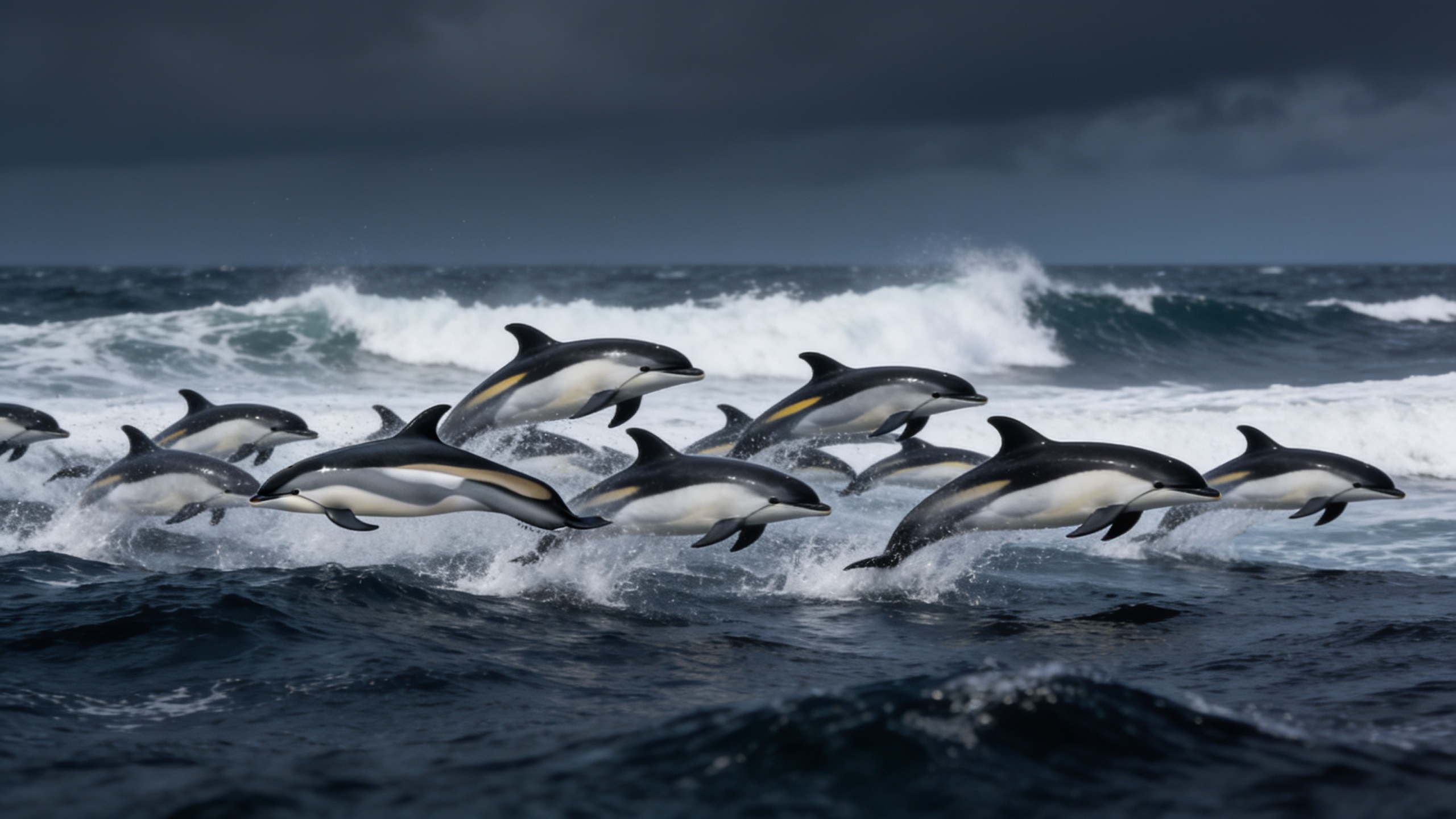
A robust, powerfully built dolphin with a striking color pattern. The back is dark grey-black; the sides show a white patch behind the dorsal fin, followed by a distinctive yellow-ochre streak extending toward the tail. The belly is white. The name comes from the prominent white lateral blaze. The short, stubby beak and muscular build distinguish it from the more slender Common Dolphin.
Acute hearing and echolocation, well-suited to the productive but often low-visibility waters of the North Atlantic shelf. Vision is adapted for diving to 600+ feet.
Highly vocal. Produces complex whistles and click-trains. Large pods are acoustically very active — the sound of a large Atlantic White-sided dolphin aggregation can be heard through a boat's hull from considerable distance.
Cooperative hunters of schooling prey — herring, mackerel, and sand lance. Pods work together to herd fish schools to the surface, where seabirds also gather to take advantage. Deep divers for squid at night. Often associated with humpback and fin whales at productive feeding grounds.
Gestation
Approximately 12 months. Females give birth every 2–3 years.
Birth
Calves are approximately 45 inches long and 30 lbs at birth. Born in summer months.
Calves
Calves nurse for 18 months and remain closely associated with their mothers for 2+ years. The yellow-ochre flank streak is clearly visible even on very young animals.
Females reach sexual maturity at approximately 6–12 years; males at 7–11 years.
Found in groups of 5–50 for daily activities; feeding aggregations of 1,000+ documented on rich North Atlantic feeding grounds. One of the most commonly sighted cetaceans on whale-watching trips out of New England.
Fast and acrobatic. Common names "Jumper" and "Springer" reflect their enthusiasm for leaping. Frequently bow-rides and plays around vessels. Can reach 20+ mph.
Mass strandings of Atlantic White-sided Dolphins on Cape Cod and European beaches occur periodically, sometimes involving hundreds of animals at a time. The cause of these mass strandings is not fully understood but may be linked to deep-water topography and tidal dynamics.
27+ years. Threats include drive hunts in the Faroe Islands (hundreds killed annually), bycatch in herring and mackerel trawls, marine pollution, and prey depletion.
Dolphin Store