← All Species
Tursiops truncatus
Bottlenose Dolphin
Least Concern
Also known as: Atlantic Bottlenose Dolphin +4 more
Tursiops truncatus
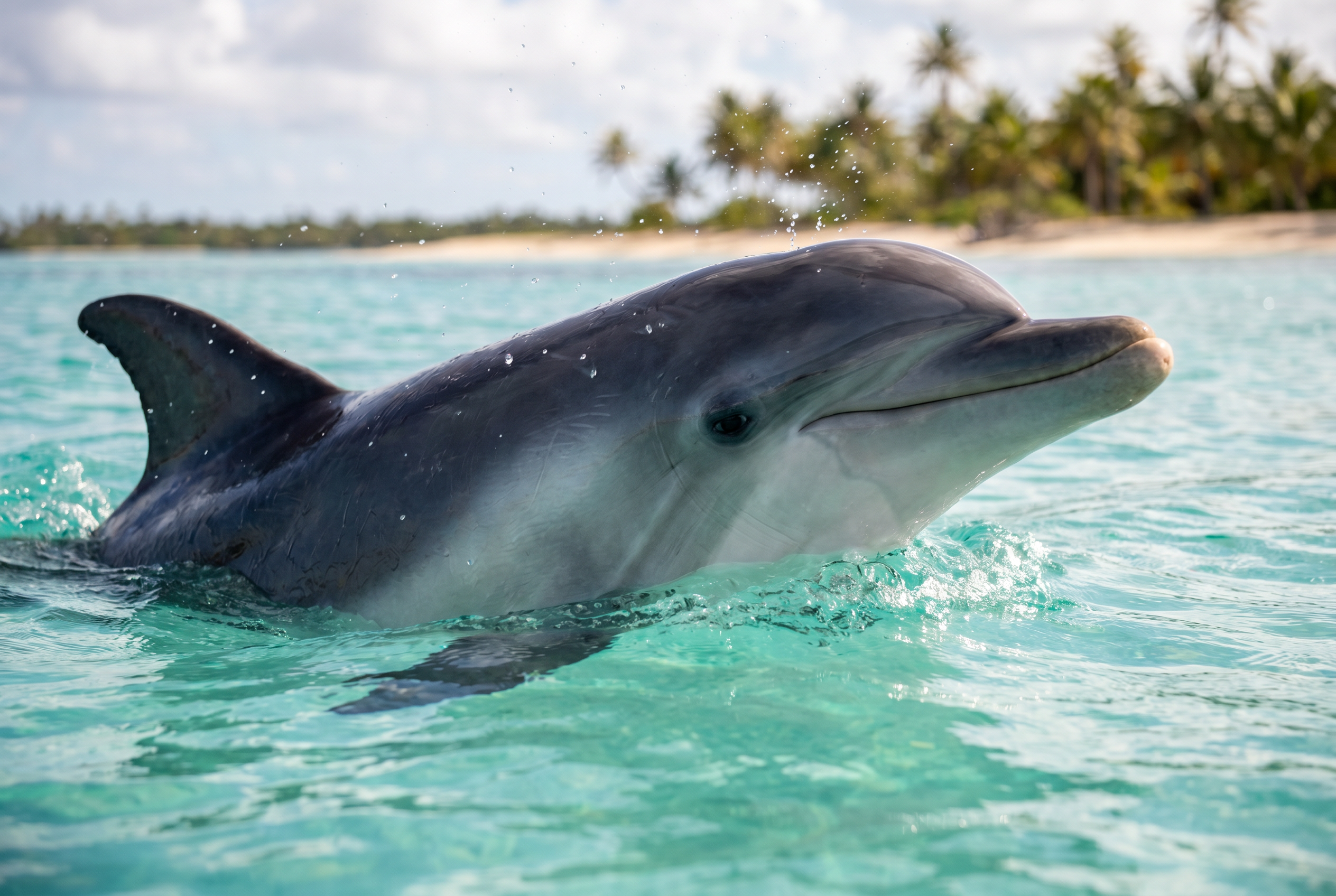
The world's most recognized dolphin — dark grey on top, fading to light grey on the underside. Bottlenose Dolphins are highly intelligent and social, with documented use of tools, signature whistles, and complex alliances. A layer of blubber makes up approximately 18–20% of their body weight.
Bottlenose Dolphins have acute hearing detecting sounds from 200 Hz to 150 kHz. They have excellent vision both in and out of water. Their sense of touch is well developed, particularly around the rostrum. Echolocation provides a detailed three-dimensional sonar sense.
Each dolphin develops a unique signature whistle in the first year of life — a form of name used to maintain contact. They communicate complex social information through body language, jaw claps, and bubble blowing.
Highly social hunters. A pod will work together to herd a school of fish, trapping them in shallow waters or against the surface. Some populations use sponges as tools to probe the seafloor. Adults eat 4–5% of their body weight per day.
Gestation
12 months. Females breed every 2–3 years.
Birth
Calves are born tail-first to prevent drowning. Newborns are 3–4 feet long and weigh approximately 44 lbs.
Calves
Calves nurse for up to 18 months and typically stay with their mother for 3–6 years. Calves learn hunting techniques, social behaviors, and signature whistles from their mothers and other pod members.
Female Bottlenose Dolphins reach sexual maturity at 5 to 12 years of age. Males mature at 10 to 12 years, though breeding success may not occur until the mid-teens due to social competition.
Highly social, living in pods typically of 2–15 individuals. Several pods may temporarily join to form larger groups of 100+. Males form long-term alliances that cooperate to compete with other male groups.
Bottlenose Dolphins can swim up to 18 mph and jump up to 20 feet out of the water. They can remain underwater for up to 20 minutes.
Bottlenose Dolphins are voluntary breathers — they never breathe automatically. During sleep (unihemispheric sleep), one brain hemisphere remains active while the other rests. They are one of the few non-human animals to recognize themselves in mirrors.
In excess of 40 years. Natural predators include tiger sharks, dusky sharks, and bull sharks. Fishing nets, pollution, and habitat destruction also impact lifespan.
Dolphin Store