← All Species
Cephalorhynchus eutropia
Chilean Dolphin
Near Threatened
Also known as: Black Dolphin +1 more
Cephalorhynchus eutropia
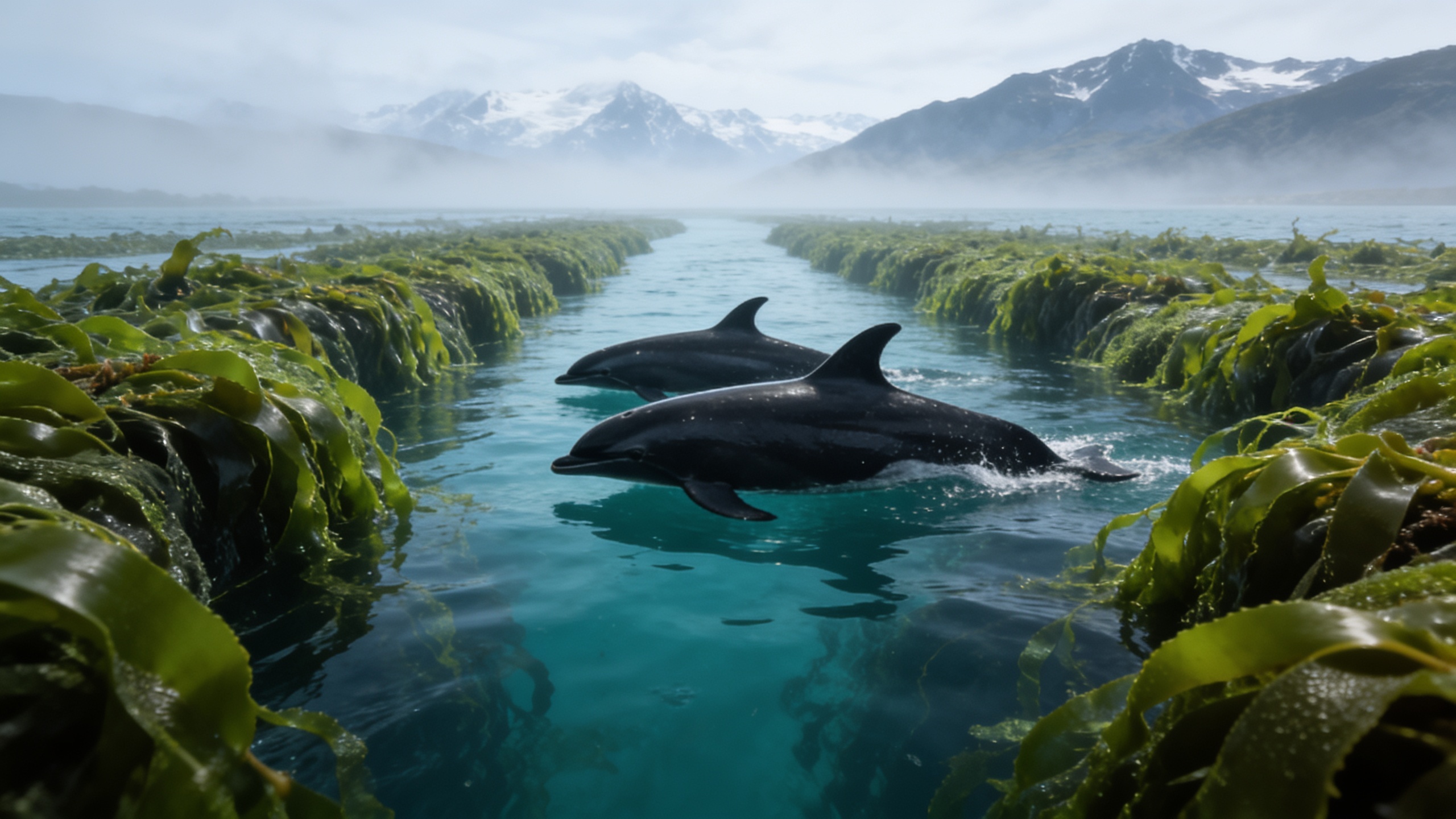
One of the four Cephalorhynchus species, the Chilean Dolphin is the least studied of all. It has a stocky, robust build with a small rounded dorsal fin (like all Cephalorhynchus). Coloring is dark grey to black on the back and head, with white patches on the chin, chest, and belly, and a pale grey flank patch. Also called the Black Dolphin for its overall dark appearance.
Uses narrow-band high-frequency echolocation similar to its Cephalorhynchus relatives. Well-adapted to the acoustically complex environment of Patagonian fjords and channels.
Like all Cephalorhynchus species, the Chilean Dolphin appears to use high-frequency clicks rather than the whistles typical of larger delphinids. Social communication is less well-studied than in more accessible species.
Feeds on small schooling fish (anchoveta, sardine), squid, and crustaceans in the shallow coastal and estuarine environment. Often forages in kelp beds and tidal channels.
Gestation
Approximately 10–11 months. Reproductive rate estimated at every 2–3 years.
Birth
Calves are estimated at approximately 24 inches long and 10 lbs at birth.
Calves
Calves remain closely associated with their mothers for at least 1–2 years. Very few direct observations of calves have been made.
Estimated at 5–9 years for both sexes, by comparison with related Cephalorhynchus species.
Found in small groups of 2–10 individuals. Aggregations of up to 50 occur at productive feeding sites. May associate with Peale's Dolphins in southern Chile.
Energetic swimmers capable of impressive speeds for their small size. Occasionally bow-rides. Not known for dramatic leaping.
The Chilean Dolphin is endemic to Chile — it is found nowhere else in the world. It is one of the least-studied dolphins because its remote Patagonian habitat makes research logistically challenging.
Estimated 15–20 years. Threats include artisanal hunting for use as crab bait, entanglement in salmon aquaculture nets, gillnet bycatch, and boat disturbance in key habitat areas.
Dolphin Store