← All Species
Lipotes vexillifer
Chinese River Dolphin
Critically Endangered
Also known as: Baiji +3 more
Lipotes vexillifer
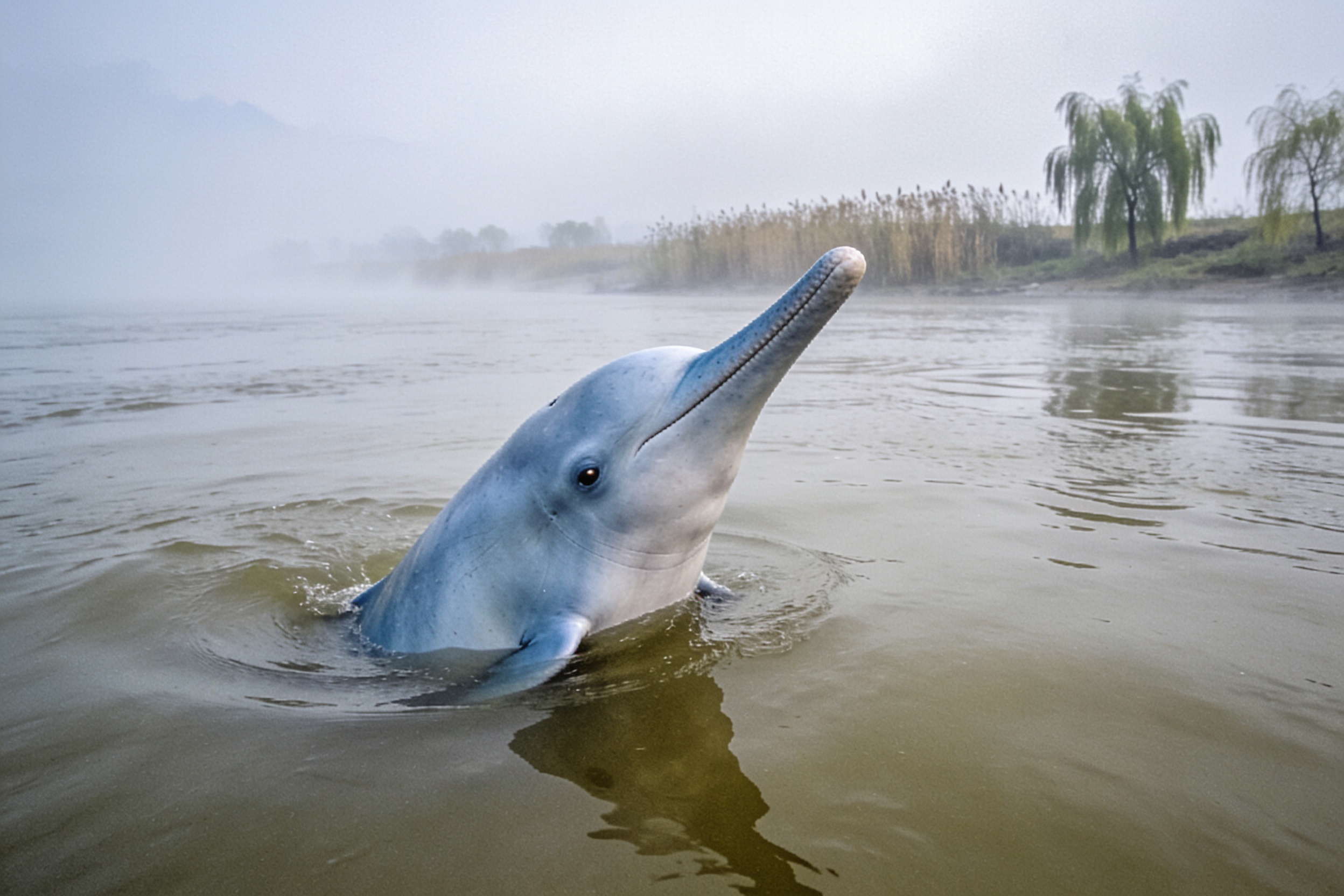
The Chinese River Dolphin is widely considered the first dolphin species driven to extinction by human activity — though no formal extinction has been declared. The Baiji had a pale blue-grey upper body, white belly, and a distinctive upturned beak. Its eyes were tiny and set high on the head. It navigated almost entirely by echolocation.
The Baiji had very small, poorly developed eyes positioned high on the head — functionally blind underwater. All navigation and prey location relied on a highly developed echolocation system using high-frequency clicks.
The Baiji used high-pitched whistles and echolocation clicks to communicate and navigate. Boat noise on the heavily trafficked Yangtze was a major stressor.
Used echolocation exclusively to locate fish in turbid Yangtze water. Hunted near the riverbed in shallow areas, feeding on catfish, carp, and other river fish.
Gestation
Approximately 10–11 months. Females gave birth every 2 years.
Birth
Calves were approximately 3 feet long at birth and weighed around 11 lbs. Birth position was tail-first.
Calves
Calves stayed close to their mothers for approximately 2 years, learning echolocation and navigation skills.
Both sexes reached sexual maturity at approximately 4–6 years of age.
Typically found alone or in small groups of 2–6 individuals. Larger groups of up to 16 were occasionally recorded at productive feeding sites.
Slow and cautious swimmers, reaching approximately 3–6 mph. Not known for acrobatics.
A 2006 survey of the entire 1,669-mile Yangtze River by an international team of scientists found zero individuals. If extinct, the Baiji would be the first cetacean driven to extinction in recorded history.
Estimated at 25+ years. The population collapsed due to industrialization of the Yangtze, dam construction, heavy boat traffic, electrofishing, dynamite fishing, and bycatch.
Dolphin Store