← All Species
Stenella clymene
Clymene Dolphin
Least Concern
Also known as: Short-snouted Spinner Dolphin +1 more
Stenella clymene
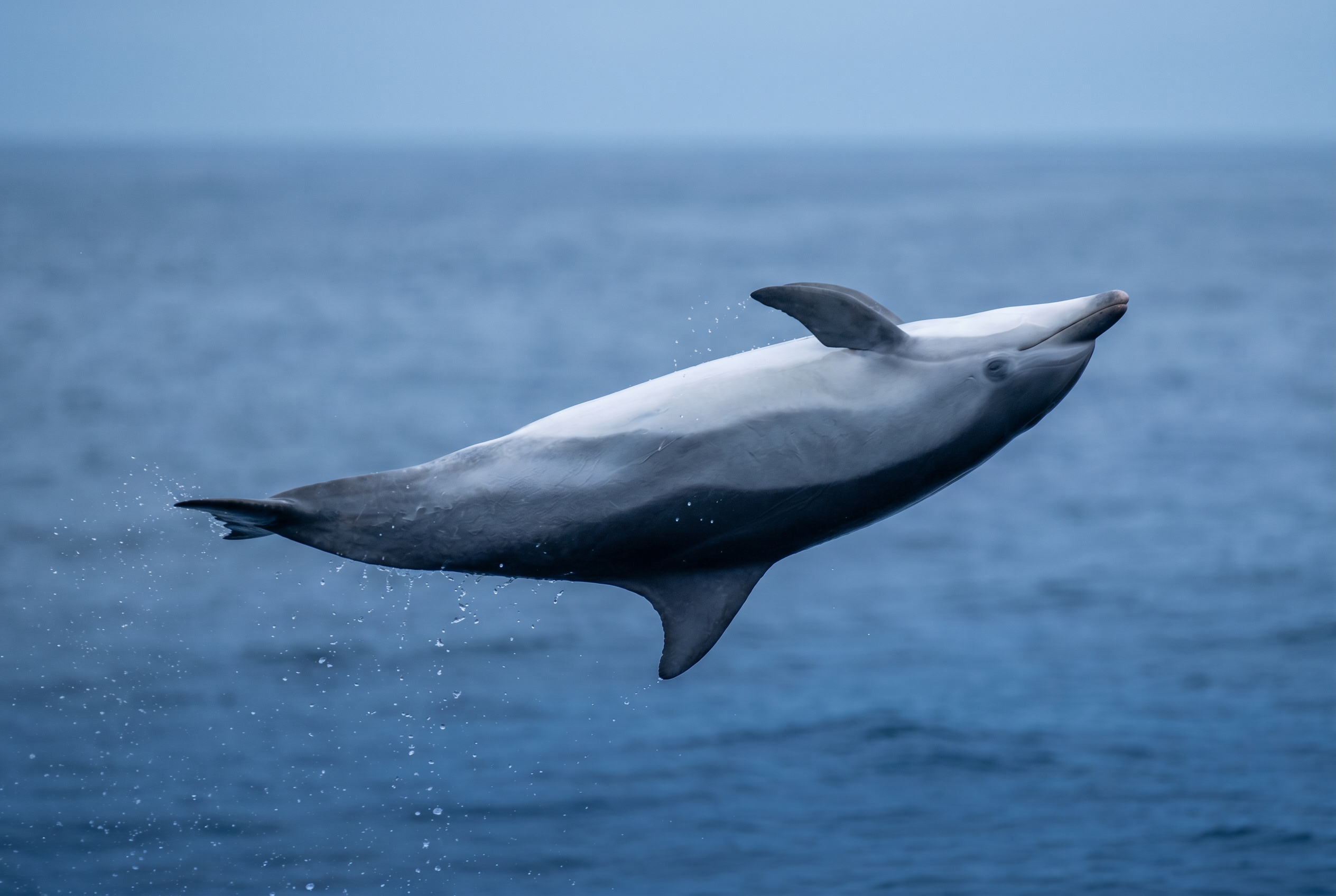
The Clymene Dolphin was only recognized as a distinct species in 1981. It is a hybrid species — a relatively recent evolutionary cross between the Spinner Dolphin and the Striped Dolphin — confirmed by genetic analysis. It closely resembles both parents: the shorter beak and stockier build come from the Striped Dolphin; the spinning behavior comes from the Spinner Dolphin. Has a distinctive three-part color pattern: dark cape, pale grey sides, white belly.
Well-developed echolocation and hearing. Active at night when prey rises in the water column. Hearing range similar to other Stenella species — up to 120 kHz.
Produces clicks and whistles for social communication and echolocation. Like the Spinner Dolphin, it uses spinning leaps as a communication and play behavior.
Nocturnal hunters — feeds on mesopelagic fish and squid that rise toward the surface at night. Hunts cooperatively in groups that coordinate to herd and concentrate prey.
Gestation
Approximately 11 months. Reproductive rate estimated every 2–3 years.
Birth
Calves are estimated at 30–35 inches long at birth.
Calves
Nursing estimated at 12–18 months based on related species.
Estimated at 4–8 years for females; 6–10 years for males.
Found in groups of 5–100, occasionally more. Often associates with other dolphin species in the open Atlantic. Groups regularly mix with Spinner Dolphins and Common Dolphins.
Like its Spinner Dolphin parent, the Clymene Dolphin is known for spinning leaps — though typically fewer rotations per jump than a full Spinner Dolphin. Actively bow-rides vessels.
The Clymene Dolphin is one of the very few known naturally occurring cetacean hybrid species — the product of a relatively recent hybridization event between Spinner and Striped Dolphins in the Atlantic. Genetic analysis confirmed its hybrid origin in 2014.
20–25 years estimated. Threats include bycatch in tuna longlines and drift nets, direct hunting in some Caribbean nations, and prey depletion.
Dolphin Store