← All Species
Pontoporia blainvillei
Franciscana River Dolphin
Vulnerable
Also known as: La Plata Dolphin +2 more
Pontoporia blainvillei
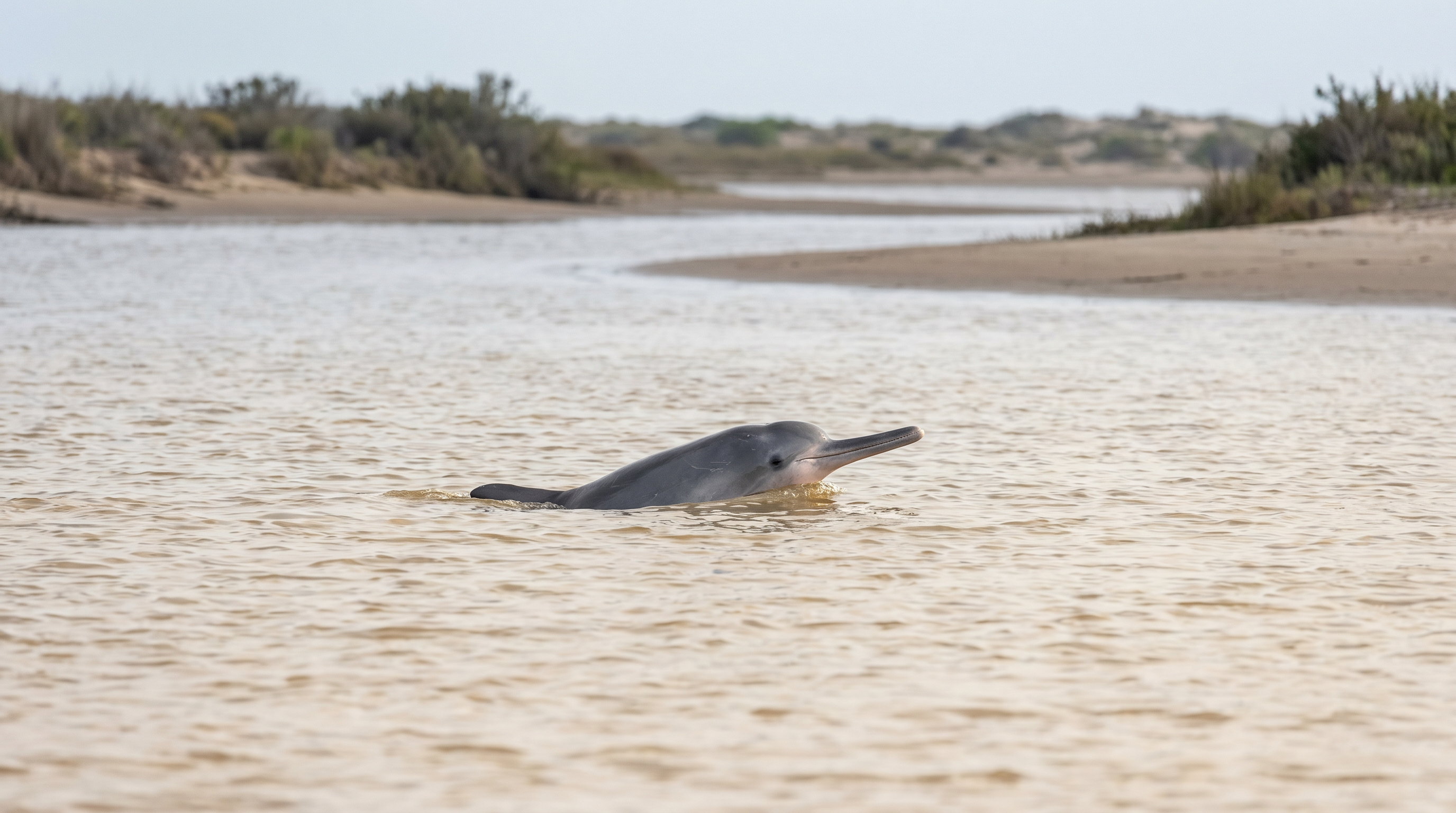
The Franciscana has the longest beak of any dolphin relative to body size — sometimes exceeding 15% of total body length. It is greyish-brown on top with a pale belly, and inhabits shallow coastal and estuarine waters. Despite appearances, it is not a true freshwater river dolphin but belongs to its own family Pontoporiidae.
Highly developed echolocation using narrow-band high-frequency clicks. Vision is limited in the turbid coastal waters it inhabits. Sensitive to underwater noise pollution from shipping and fishing activity.
Uses high-frequency clicks and burst-pulse sounds for both echolocation and social communication. Relatively little is known about the full range of their vocalizations.
Hunts by probing the seafloor with its long beak in shallow coastal and estuarine waters. Feeds on small schooling fish, squid, and shrimp. Often forages in water less than 30 feet deep.
Gestation
Approximately 11 months. Females give birth every 2 years. One of the most productive reproductive rates among small dolphins.
Birth
Calves are approximately 24 inches long and weigh 7–9 lbs at birth. Born tail-first.
Calves
Calves nurse for approximately 9 months and remain close to their mothers for up to 1.5 years. Calves grow rapidly in their first year.
Females reach sexual maturity at 2–3 years — one of the youngest maturation ages of any dolphin. Males mature at 3–4 years.
Generally found alone or in small groups of 2–5. Larger loose aggregations of up to 15 have been observed at productive feeding sites.
Relatively slow, non-acrobatic swimmers adapted to shallow coastal environments. Rarely leaps or bow-rides. Can reach speeds of 10–12 mph.
The Franciscana's beak-to-body ratio is the highest of any living dolphin — a long, slender beak filled with numerous small, uniform teeth specialized for catching soft-bodied prey. This extreme beak length develops progressively through growth.
16–20 years. One of the most threatened small cetaceans in the western South Atlantic — primarily due to gillnet bycatch, which kills thousands annually. Coastal development, pollution, and boat strikes are secondary threats.
Dolphin Store