← All Species
Stenella attenuata
Pantropical Spotted Dolphin
Least Concern
Also known as: Bridled Dolphin +2 more
Stenella attenuata
Born spotless — adults become increasingly spotted throughout life. Calves are born with a dark grey-blue cape and no spots; adults are heavily speckled on both back and belly. The spotting pattern can reliably indicate approximate age.
Well-developed echolocation. Studies have shown Pantropical Spotted Dolphins can distinguish between objects differing by less than a centimeter in shape using echolocation alone.
Pantropical Spotted Dolphins produce complex whistles, clicks, and burst-pulse sounds. Spot density communicates age and maturity to other pod members.
In the Eastern Tropical Pacific, they cooperate with yellowfin tuna to herd flying fish and other prey — a mutually beneficial hunting relationship.
Gestation
11 months. Females breed every 1–4 years.
Birth
Calves are approximately 35 inches long and 22 lbs at birth. Born without spots.
Calves
Calves nurse for 12–18 months. Calves gradually develop their adult spot pattern over the first 8–12 years of life.
Females reach sexual maturity at 9–11 years; males at 12–15 years — one of the slowest maturation rates of any dolphin.
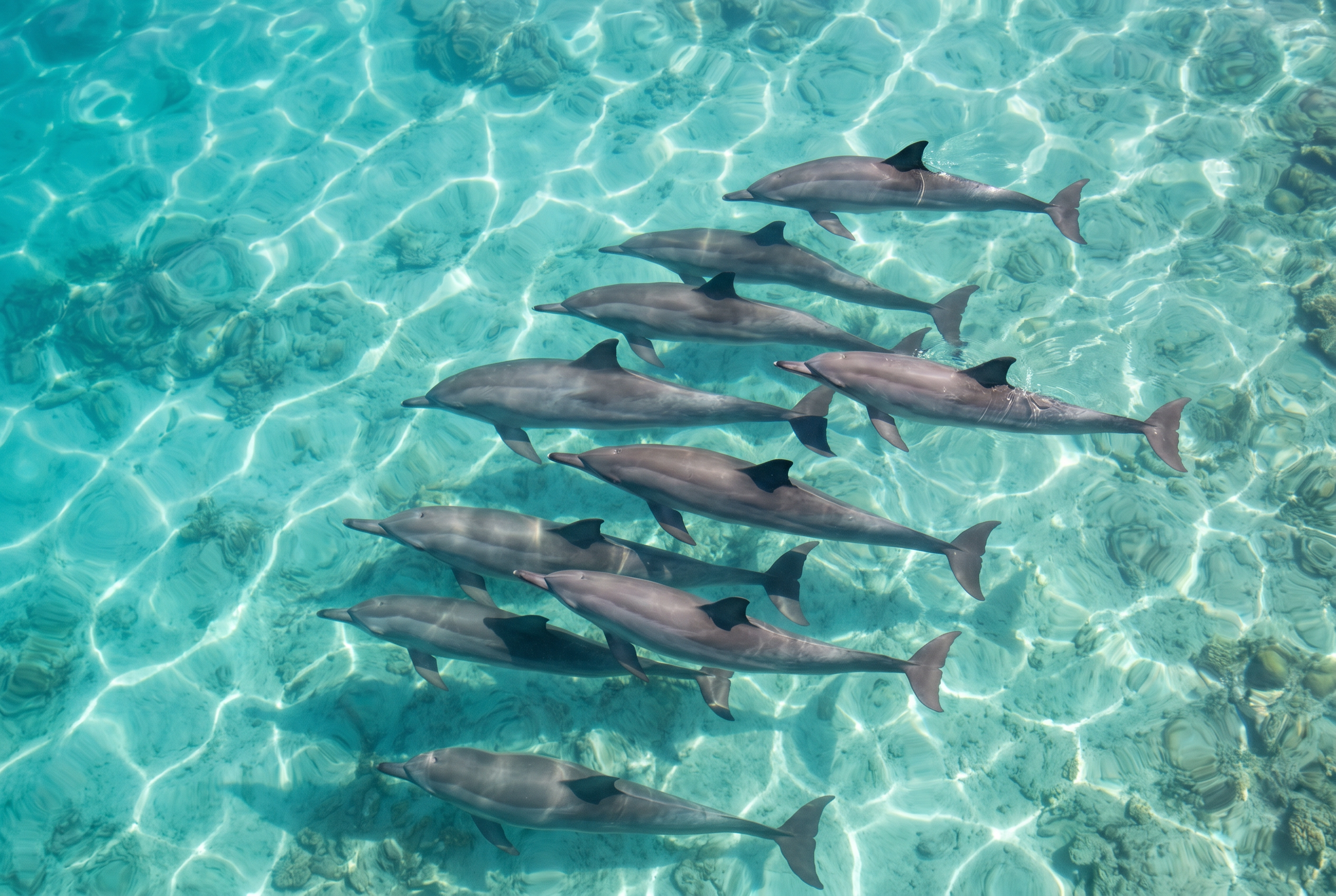
Found in schools of 5–1,000+. Strong long-term bonds form between same-sex individuals.
Fast swimmers and accomplished leapers. Schools porpoise actively ahead of vessels.
An estimated 6–7 million Pantropical Spotted Dolphins were killed in Eastern Tropical Pacific tuna nets between 1960 and 1990 — the largest documented human killing of any marine mammal species in history.
40+ years. Current threats include bycatch in artisanal fisheries, direct hunting, prey depletion, and marine debris.
Dolphin Store