← All Species
Lagenorhynchus australis
Peale's Dolphin
Least Concern
Also known as: Black-chinned Dolphin
Lagenorhynchus australis
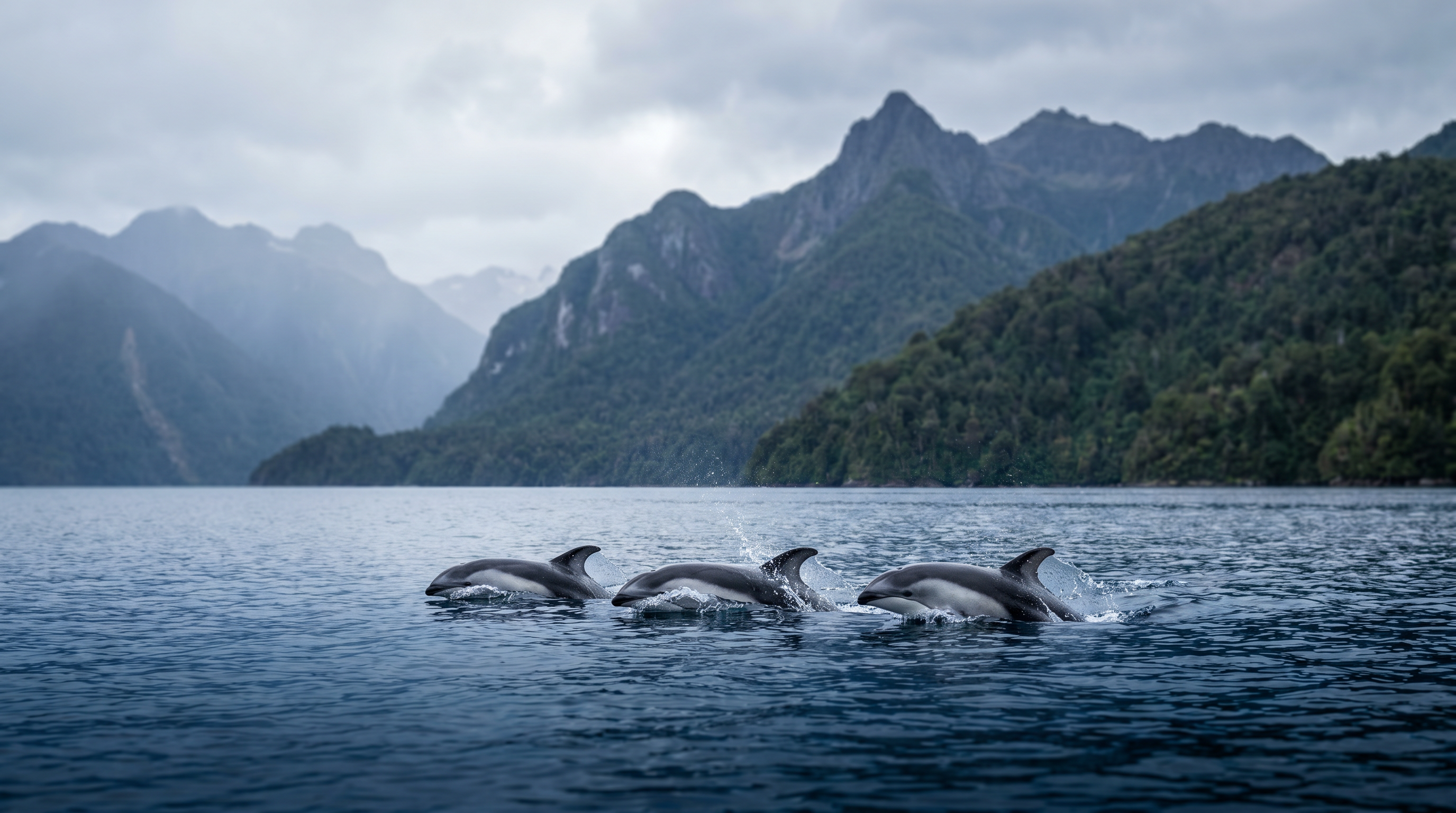
Named for American ornithologist Titian Peale, this robust dolphin has a complex color pattern: dark grey to black on the back, flanks patterned with pale grey patches, a distinctive black 'chin strap' (giving the alternative name), and a white belly. The flank pattern is particularly variable between individuals. Found only in the cold southern waters of South America.
Well-developed echolocation suited to the often turbid and cold waters of the Patagonian shelf. Good vision in the clear inshore kelp forest environments it frequents.
Peale's Dolphins produce clicks and whistles for social communication and echolocation. Less studied than North Atlantic equivalents, but presumed to have similar acoustic complexity.
Cooperative hunters in kelp forest and tidal channel environments. Feeds on schooling fish, squid, and crustaceans. Often associates with Commerson's Dolphins and Dusky Dolphins in the southern part of its range.
Gestation
Approximately 11–12 months. Reproductive rate estimated at every 2–3 years.
Birth
Calves estimated at approximately 35 inches and 22 lbs at birth.
Calves
Nursing estimated at 12–18 months. Calves have been observed nursing while traveling with the pod.
Estimated at 7–10 years for both sexes.
Found in groups of 5–30 individuals. Larger aggregations of up to 100 occur at productive feeding grounds. Frequently associates with Commerson's Dolphins, Dusky Dolphins, and Magellanic Penguins at shared feeding sites.
Energetic and acrobatic. Peale's Dolphins are enthusiastic bow-riders — often the first cetacean to approach vessels in Patagonian waters. Frequently leaps and side-slaps.
Peale's Dolphin is the most robust member of the Lagenorhynchus genus and is found only in the remote, cold waters of southern South America. It is one of the few dolphin species regularly encountered alongside penguins at shared feeding grounds.
Estimated 20–25 years. Threats include gillnet bycatch in Argentine and Chilean fisheries, artisanal hunting for use as crab bait, and boat disturbance at key habitat areas.
Dolphin Store