← All Species
Stenella coeruleoalba
Striped Dolphin
Least Concern
Also known as: Blue-white Dolphin +4 more
Stenella coeruleoalba
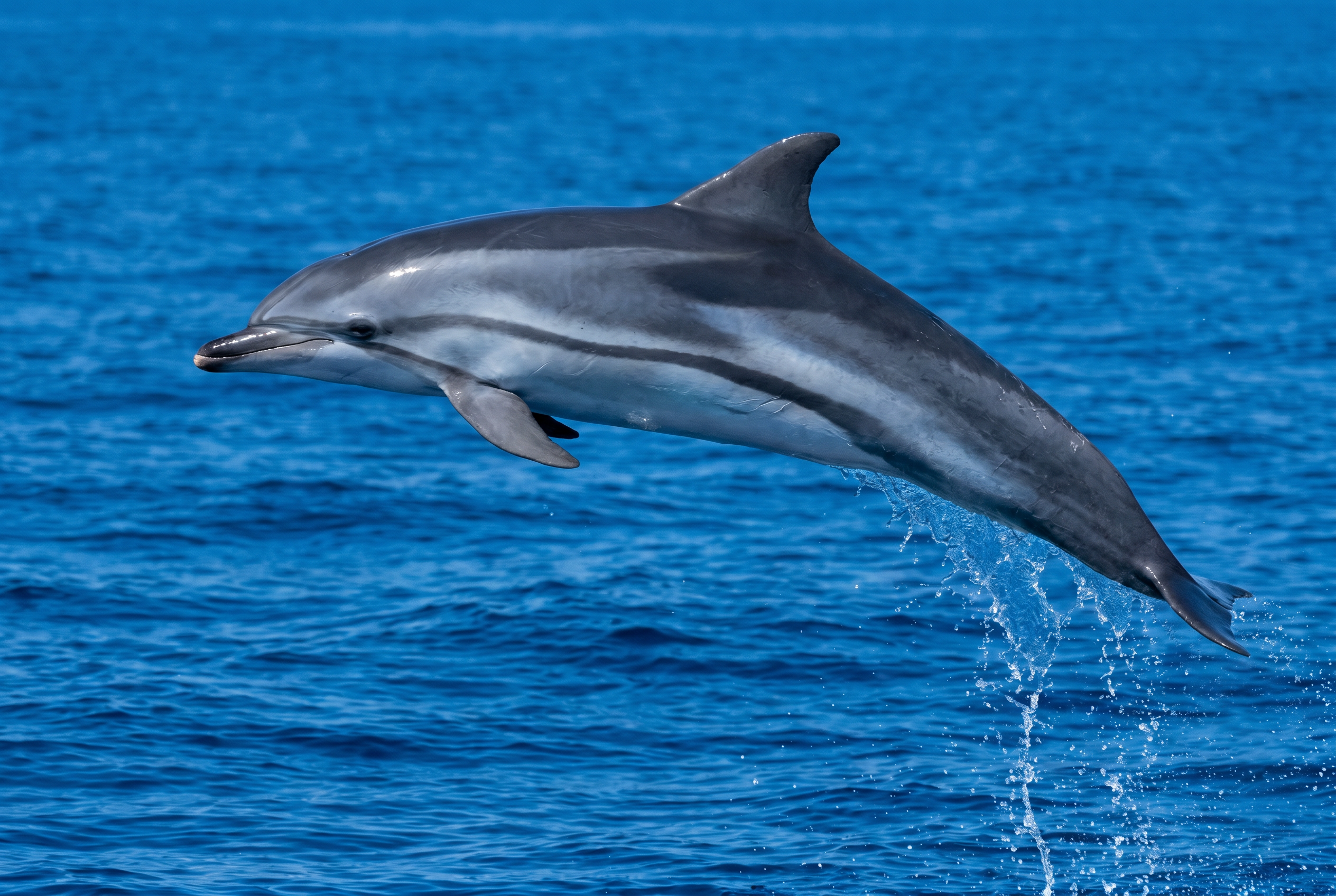
A boldly patterned, sleek offshore dolphin with a distinctive lateral stripe system. The dark blue-grey back (cape) contrasts sharply with the white-to-pale pink belly. A dark stripe runs from the beak through the eye to the anus. A secondary shorter stripe runs from the eye down toward the flipper.
The Striped Dolphin is one of the deepest diving delphinid species — adapted to hunt at 600+ meters in the mesopelagic zone.
Striped Dolphins produce complex whistles, clicks, and burst-pulse sounds. The roto-tailing leap is thought to serve a social communication function.
Deep diving hunters — capable of reaching 700 meters to hunt mesopelagic fish and cephalopods. Hunt cooperatively in large pods.
Gestation
12–13 months. Females give birth every 3–4 years.
Birth
Calves are approximately 35 inches long and weigh around 20 lbs at birth.
Calves
Calves nurse for 12–18 months and may stay with their mother for up to 4 years.
Females reach sexual maturity at 5–13 years; males at 7–15 years.
Found in schools of 25–100 in most areas; Mediterranean schools of 300–500 are common.
One of the fastest of all dolphins — reaching 25 mph. The roto-tailing leap is unique: the dolphin arches high above the water and rapidly rotates the tail at the apex.
The Striped Dolphin refuses to eat in captivity — all attempts to keep Striped Dolphins in aquaria have failed within two weeks, as they consistently refuse food.
58 years — one of the longest-lived of any delphinid dolphin. Threats include bycatch in Mediterranean longlines, direct hunting, and organochlorine contamination.
Dolphin Store