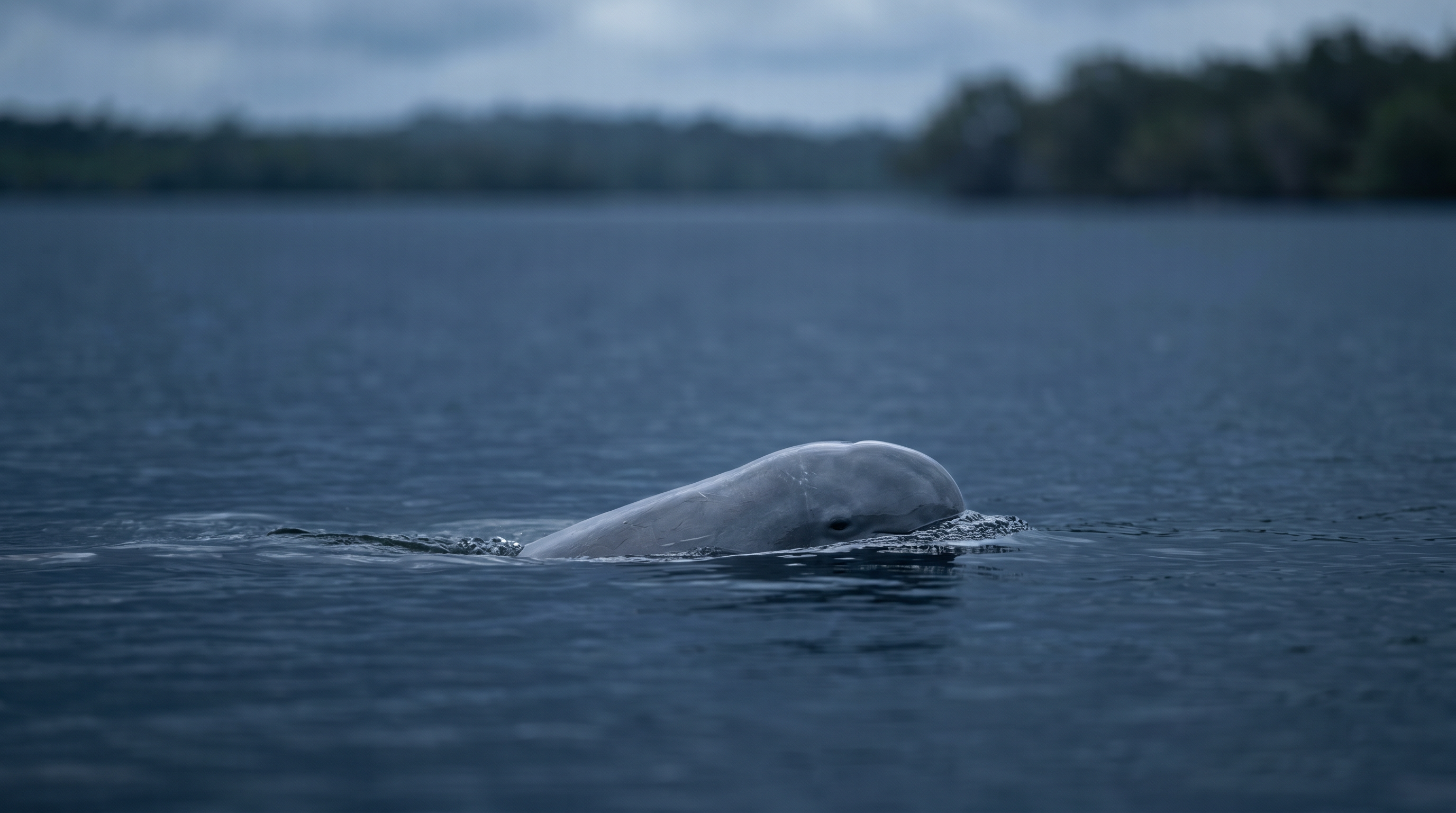
The Tucuxi is the smallest dolphin found in the Amazon River system and superficially resembles a small bottlenose dolphin — grey on top, paler grey to pink on the underside. It is one of the few dolphins to live permanently in both marine and freshwater environments. Despite sharing river habitats with the Amazon River Dolphin, the two species rarely interact closely.
Well-developed echolocation for hunting in the turbid waters of the Amazon basin. Vision is more developed than the Amazon River Dolphin (which is functionally blind) — Tucuxi have functional eyes with reasonable underwater vision.
Produces clicks, whistles, and burst-pulse sounds. Signature whistles have been documented in coastal populations. River and marine populations show differences in vocalization characteristics, reflecting their different acoustic environments.
Hunts cooperatively in small groups for schooling fish. River populations often forage in the same fish-rich areas as Amazon River Dolphins. Coastal populations take squid and crustaceans in addition to fish.
Gestation
10–12 months. Females give birth every 2–3 years.
Birth
Calves are approximately 24–28 inches long and 10–15 lbs at birth.
Calves
Calves nurse for 12–18 months and remain closely associated with their mothers for up to 2 years.
Females reach sexual maturity at 4–8 years; males at 6–8 years.
Found in groups of 2–7 in river environments; coastal populations may form groups of up to 20–30. Social structure is fission-fusion — individuals move between groups but maintain preferred associations.
More acrobatic than the Amazon River Dolphin with which it shares habitat — capable of leaping, spinning, and bow-riding. Frequently observed making spectacular leaps from the Amazon River.
Despite living in the same rivers as the Amazon River Dolphin, Tucuxi and Botos rarely interact. When they do meet, Botos typically yield — the Tucuxi, despite being much smaller, can be aggressively territorial.
25–35 years. The river population was classified as Endangered in 2020. Threats include gillnet bycatch, deliberate killing for fish bait (the same practice that threatens the boto), mercury contamination from gold mining, and dam construction fragmenting habitat.
Dolphin Store