← All Species
Lagenorhynchus albirostris
White-beaked Dolphin
Least Concern
Also known as: White-nosed Dolphin
Lagenorhynchus albirostris
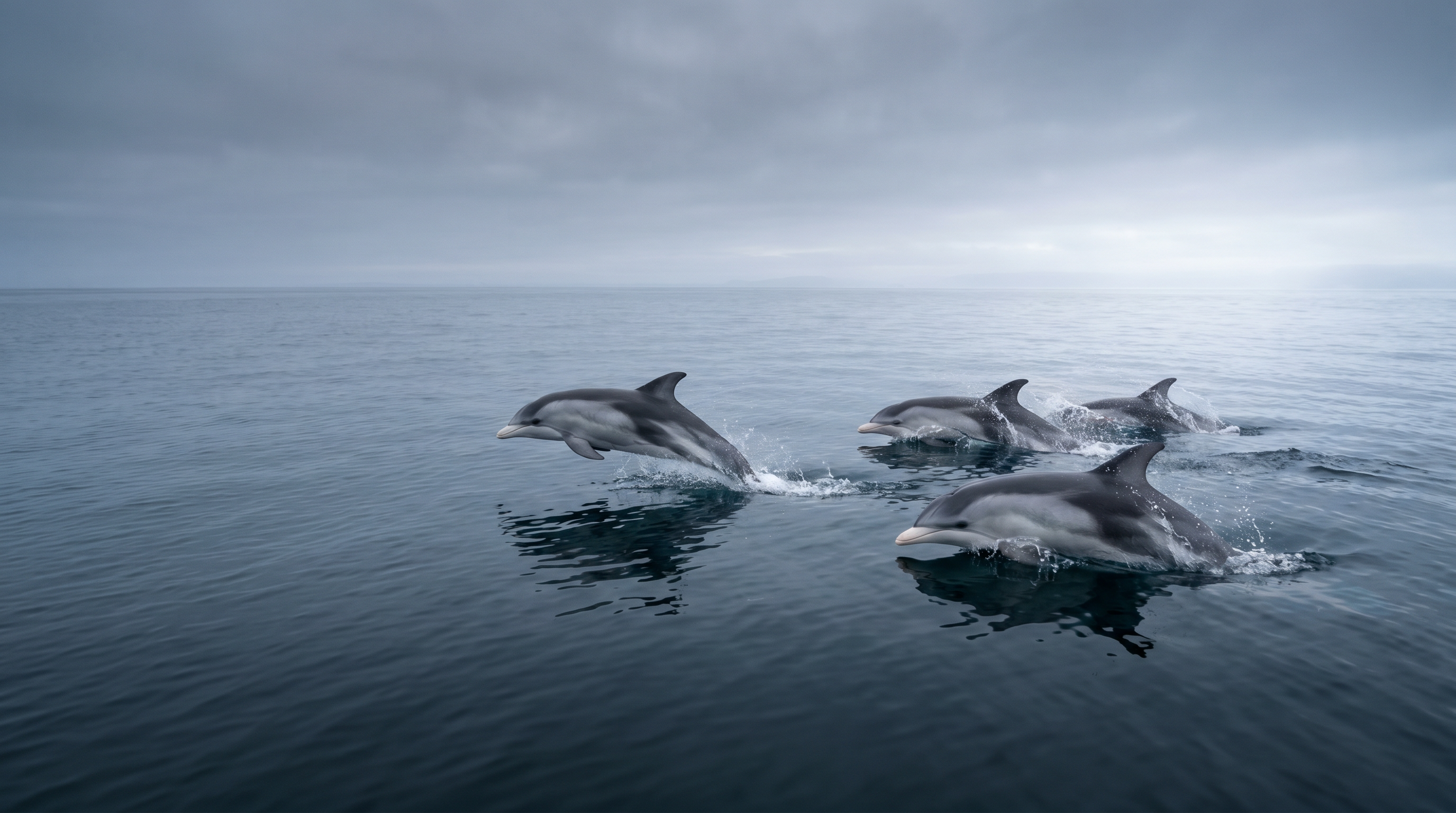
A robust, stocky dolphin of the cold North Atlantic with a complex color pattern. The back is dark grey-black; flanks are patterned with pale grey patches; the belly is white; and the beak is variable in color from white to grey-cream. The body is powerfully built with a thick layer of blubber.
Well-developed echolocation suited to the murky, cold productive waters of the North Atlantic.
White-beaked Dolphins produce whistles and clicks. Communication likely includes acoustic and tactile components during coordinated feeding.
Feed on cod, herring, capelin, haddock, and squid. Cooperate with humpback whales in some areas, taking advantage of their bubble-net feeding to concentrate fish.
Gestation
Approximately 10–11 months. Females give birth every 2–3 years. Calving peaks in summer.
Birth
Calves are approximately 45 inches long and weigh around 40 lbs at birth — relatively large for their environment.
Calves
Calves nurse for approximately 12–18 months. Young animals travel in close proximity to their mothers.
Both sexes reach sexual maturity at approximately 7–12 years.
Found in groups of 5–30 in most observations. They readily associate with other cetaceans at productive feeding sites.
Active swimmers capable of 20+ mph. Frequently breach and bow-ride.
Climate change is causing a northward shift in White-beaked Dolphin range, with animals now regularly observed in areas (e.g., Svalbard) where they were historically rare.
30+ years. Threats include bycatch in bottom trawls, direct hunting in the Faroe Islands and Iceland, and organochlorine contamination.
Dolphin Store