← All Species
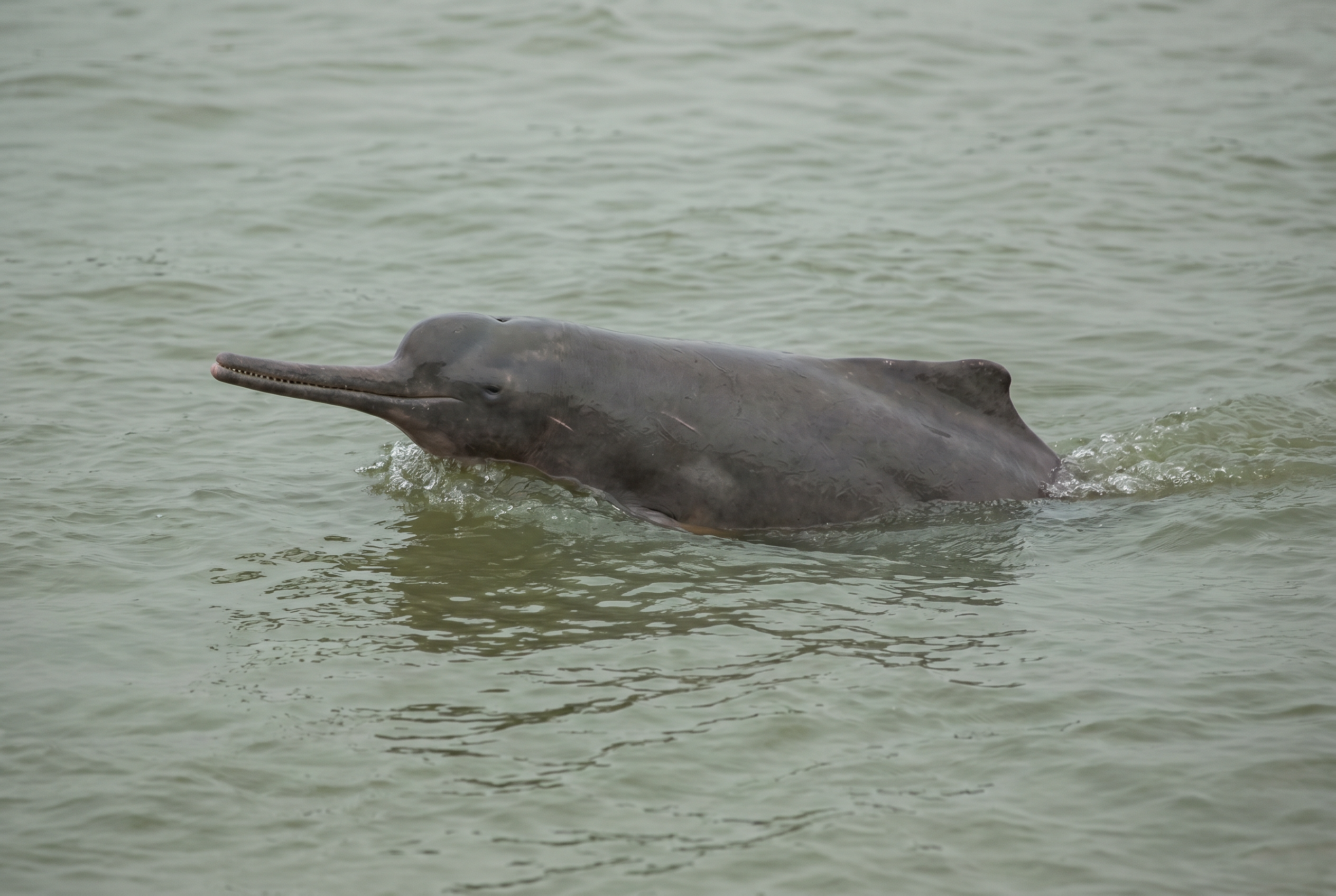
Platanista gangetica
Ganges River Dolphin
Endangered
Also known as: Indus River Dolphin +4 more
Platanista gangetica
A living fossil — one of the oldest dolphin species on Earth, virtually unchanged for millions of years. It is functionally blind: its eyes lack a lens and can only detect the direction of light. The animal navigates, hunts, and socializes entirely through echolocation. It swims on its side with one flipper dragging along the riverbed — a behavior unique among dolphins.
The Ganges River Dolphin is functionally blind — its eyes have no lens and can only detect light direction. All sensory information comes from a highly sophisticated echolocation system.
Ganges River Dolphins communicate with high-frequency clicks only — no whistles, unlike most ocean dolphins.
Hunts by swimming on its side with one flipper trailing the riverbed, emitting rapid click trains to locate fish and shrimp in sediment.
Gestation
Approximately 8–11 months. Females give birth every 2–3 years to a single calf. Calving peaks during December–January.
Birth
Calves are approximately 28 inches long and weigh around 7 lbs at birth. Born tail-first.
Calves
Calves remain with their mothers for approximately 1 year, during which they develop their echolocation skills.
Males reach sexual maturity at approximately 8–10 years; females at 6–10 years.
Typically solitary or in pairs. Small groups of 3–10 gather at productive fishing sites, particularly at river confluences.
Slow swimmers — typically 1–4 mph in daily activity. Can reach 10 mph in short bursts. Surface to breathe every 30–120 seconds.
The Ganges River Dolphin was declared the National Aquatic Animal of India in 2009. It swims on its side in shallow water — allowing its flipper to drag the riverbed and detect vibrations from buried prey.
28+ years. Threats include gillnet entanglement, irrigation barrages that fragment habitat, deliberate killing for oil, and heavy metal pollution.
Dolphin Store